VEHICLE DYNAMICS / ILLUSTRATIVE STUDY
From road input to component response
Follow one virtual vehicle from proving-ground motion to suspension detail, load histories, and whole-vehicle response.
Original illustrative animation · 40 seconds · synthetic motion and signals
THE QUESTION
What to look for.
How can a vehicle-level workflow help connect a road input with component motion and the loads that matter for a design decision? This original demonstration explains that sequence without using client data.
- Establish a repeatable road and vehicle scenario.
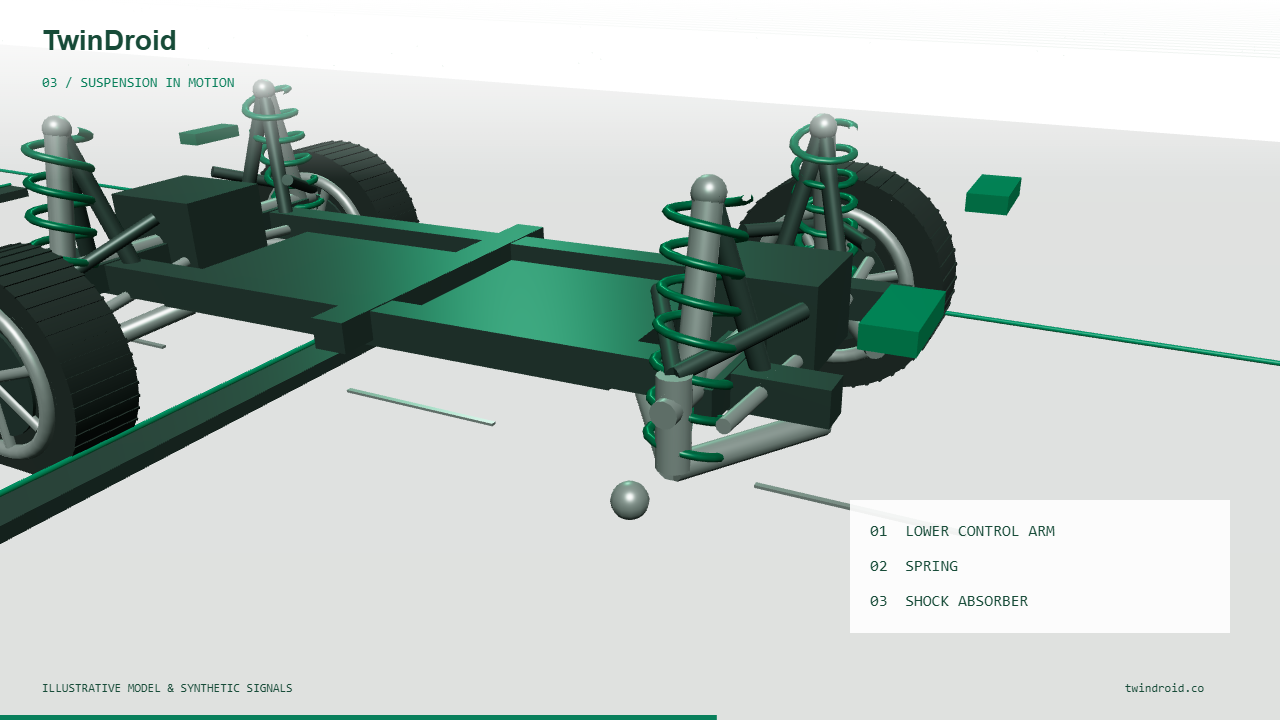
- Inspect suspension movement and the links between components.
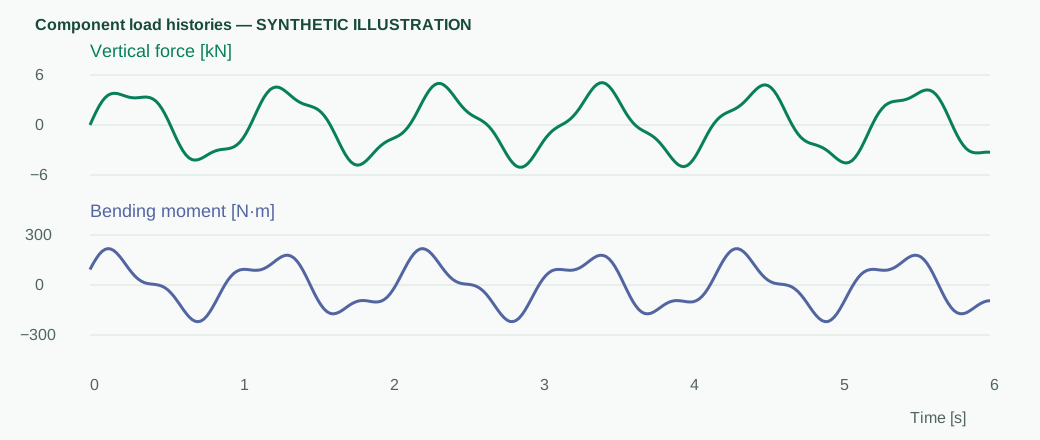
- Review force and moment histories in a defined coordinate system.
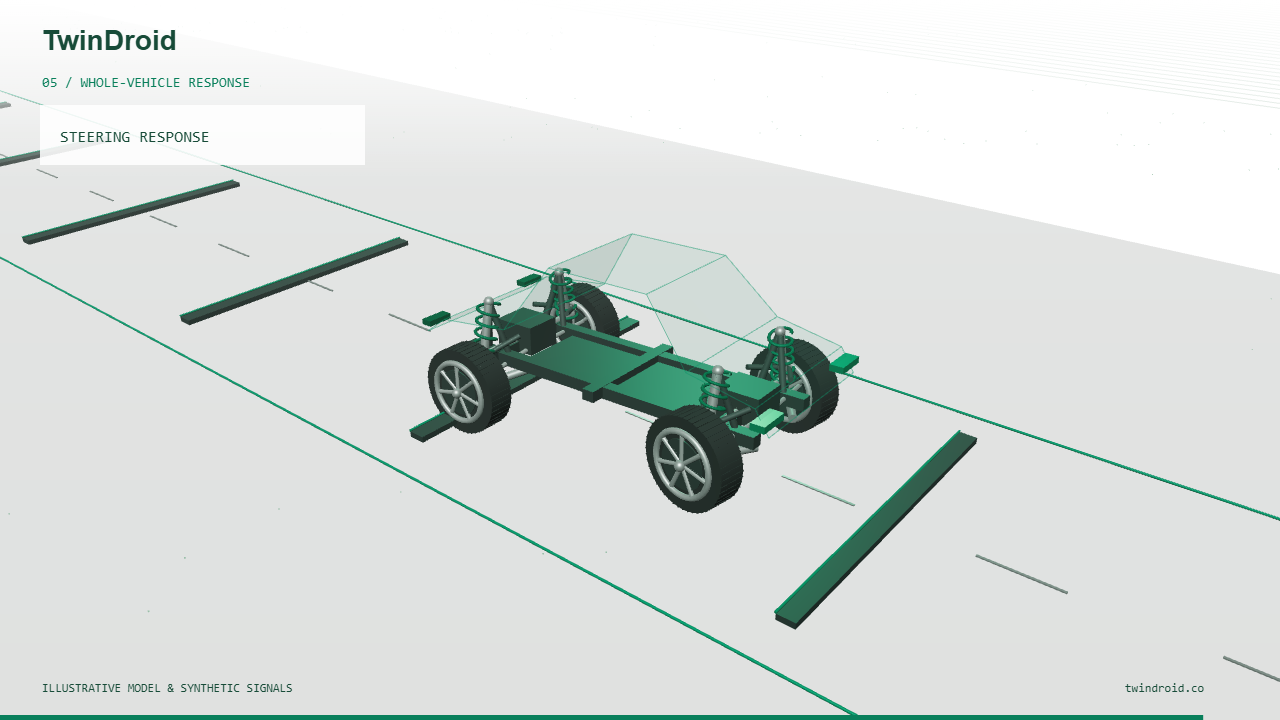
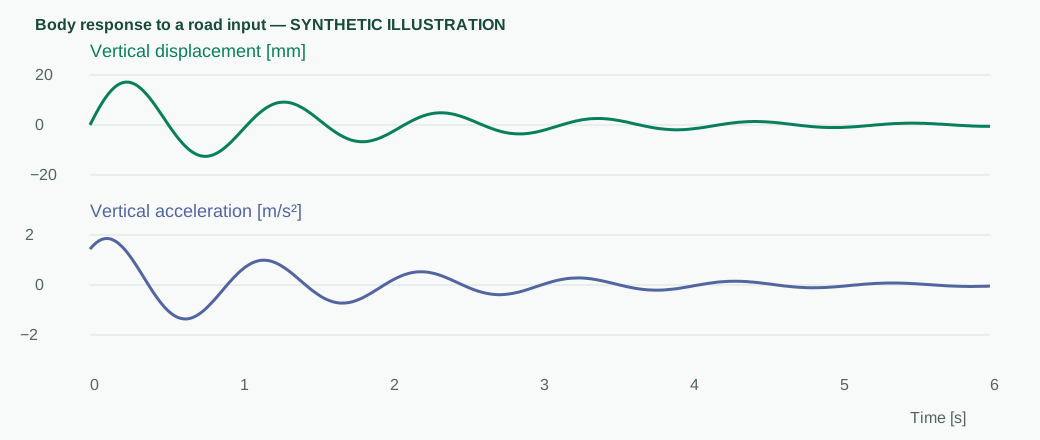
- Return to the full vehicle to consider ride, bounce, steering, and handling.
SIGNALS & INTERPRETATION
Make the response readable.
THE TAKEAWAY
The demonstration makes the analysis path visible: define the operating case, observe component response, inspect load histories, and relate the findings to the next design question.
START A CONVERSATION
Have a similar question?
Tell us about your system, the challenge, and your timeline.